
Daylight and shading optimization
Overview
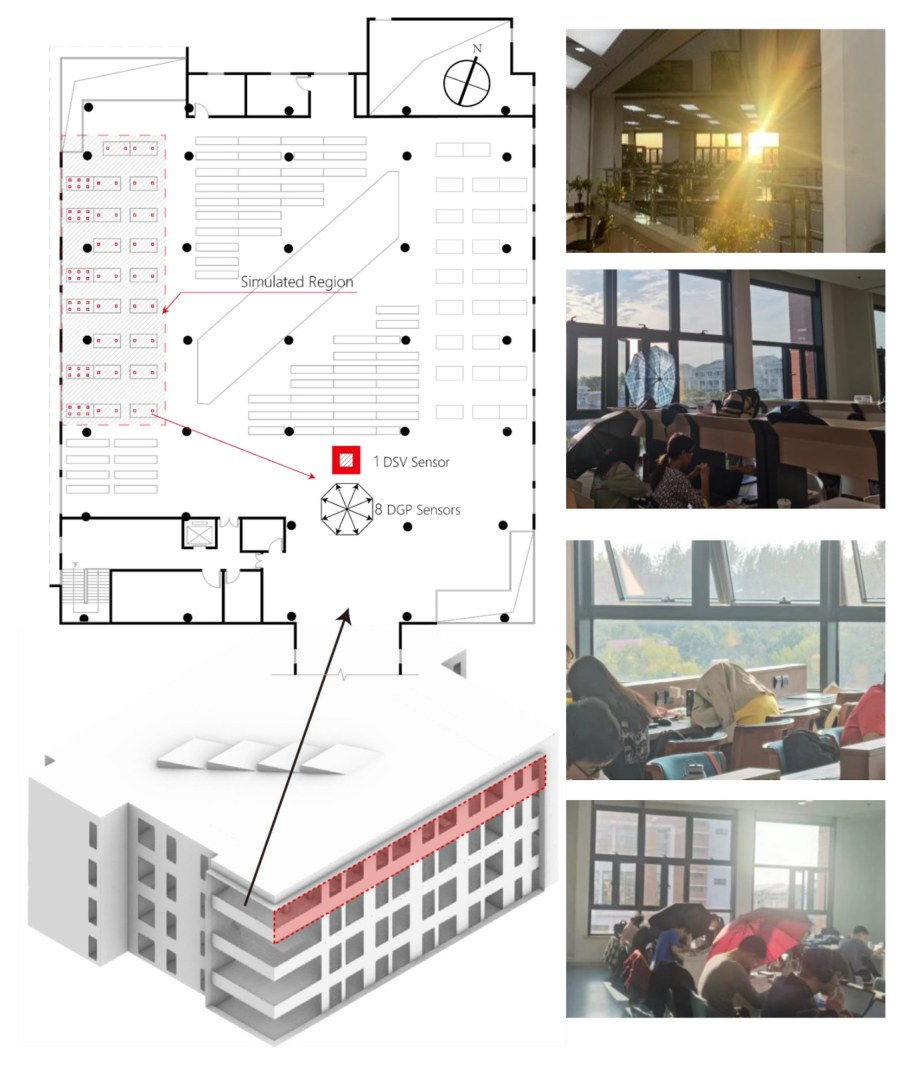
This project developed a performance-based framework for selecting and designing shading strategies in a university library. The work balanced glare reduction with satisfactory daylight conditions rather than optimizing either objective in isolation.
Method
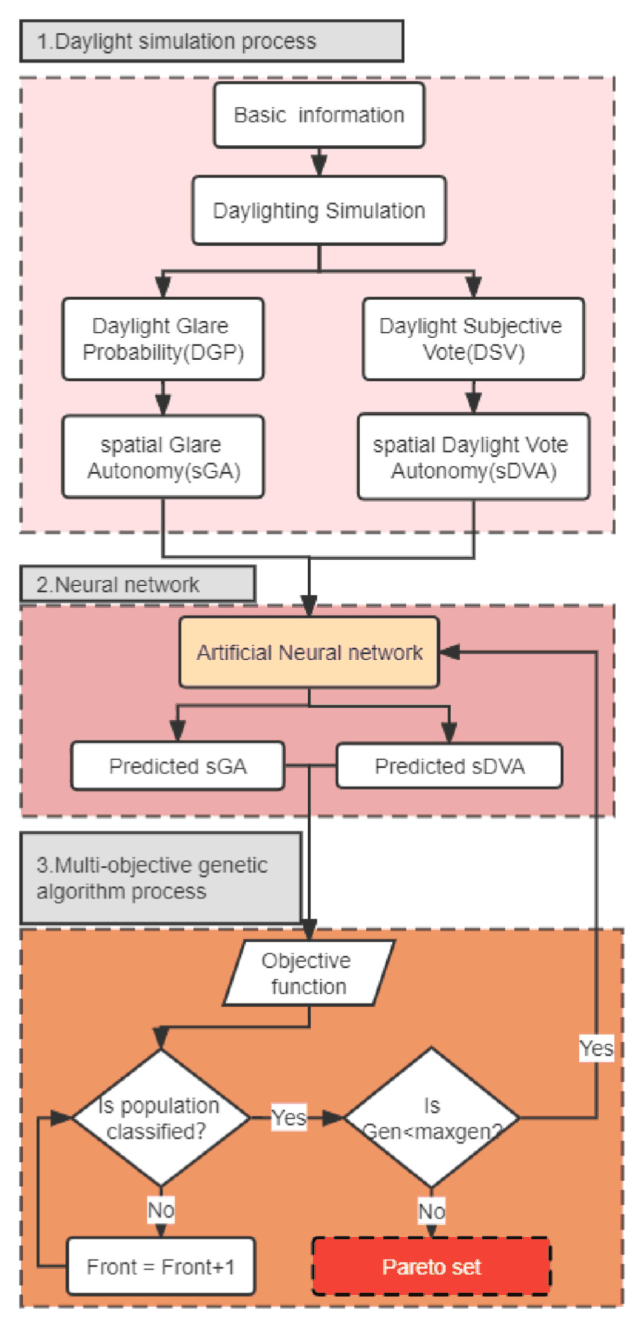
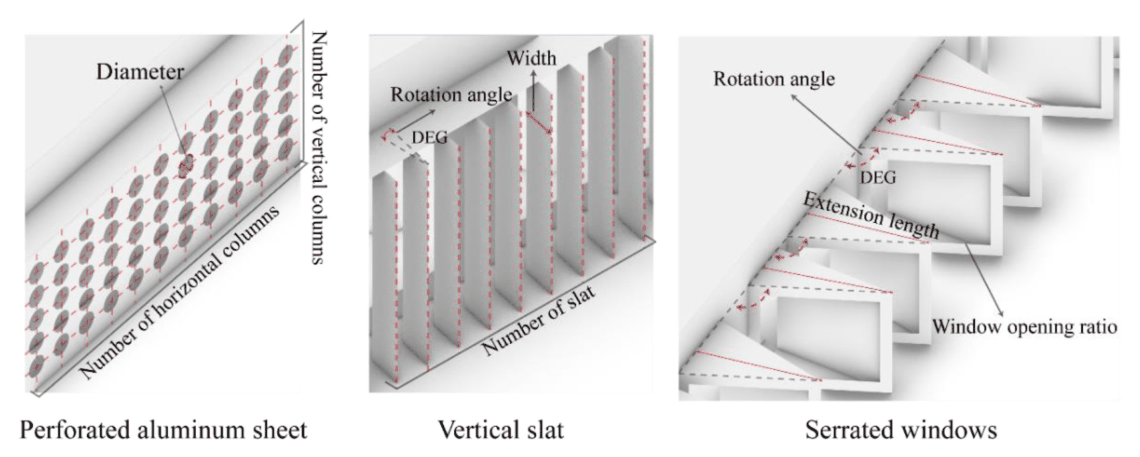
Annual daylight simulations were combined with an artificial neural network and a multi-objective genetic algorithm. Four strategies - perforated aluminum sheets, vertical slats, and south- or north-facing serrated windows - were evaluated through spatial glare autonomy and a daylight-satisfaction indicator derived from field-survey data.
Key findings
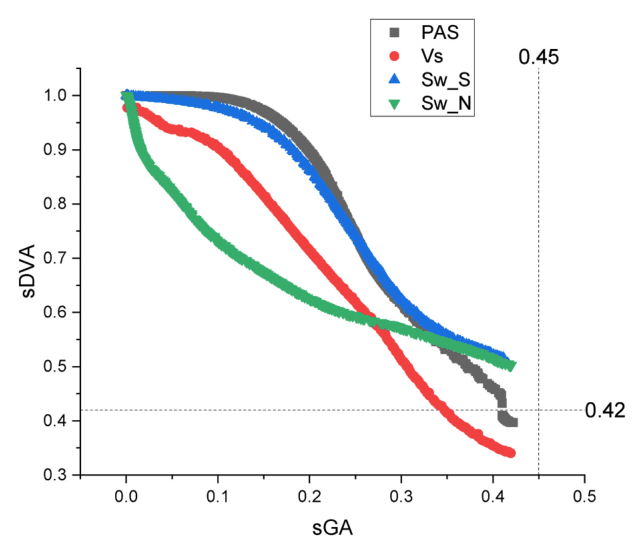
The four strategies produced distinct Pareto performance curves. North-facing serrated windows were the most effective at reducing glare, while vertical slats provided the most satisfactory illuminance levels. The near-optimal perforated-sheet, vertical-slat, north-facing serrated-window, and south-facing serrated-window designs reduced the complementary glare indicator by 9%, 22%, 8%, and 8%, respectively, while maintaining daylight satisfaction close to the original space.
Contribution
Conceptualization, data curation, methodology, software, visualization, and original-draft writing.