Real-time glare detection and luminance reconstruction
Overview
Conventional visual-comfort assessment often depends on high-dynamic-range image capture and time-consuming calibration. This project investigated a faster image-based workflow for reconstructing luminance information from a single exposure.
Method
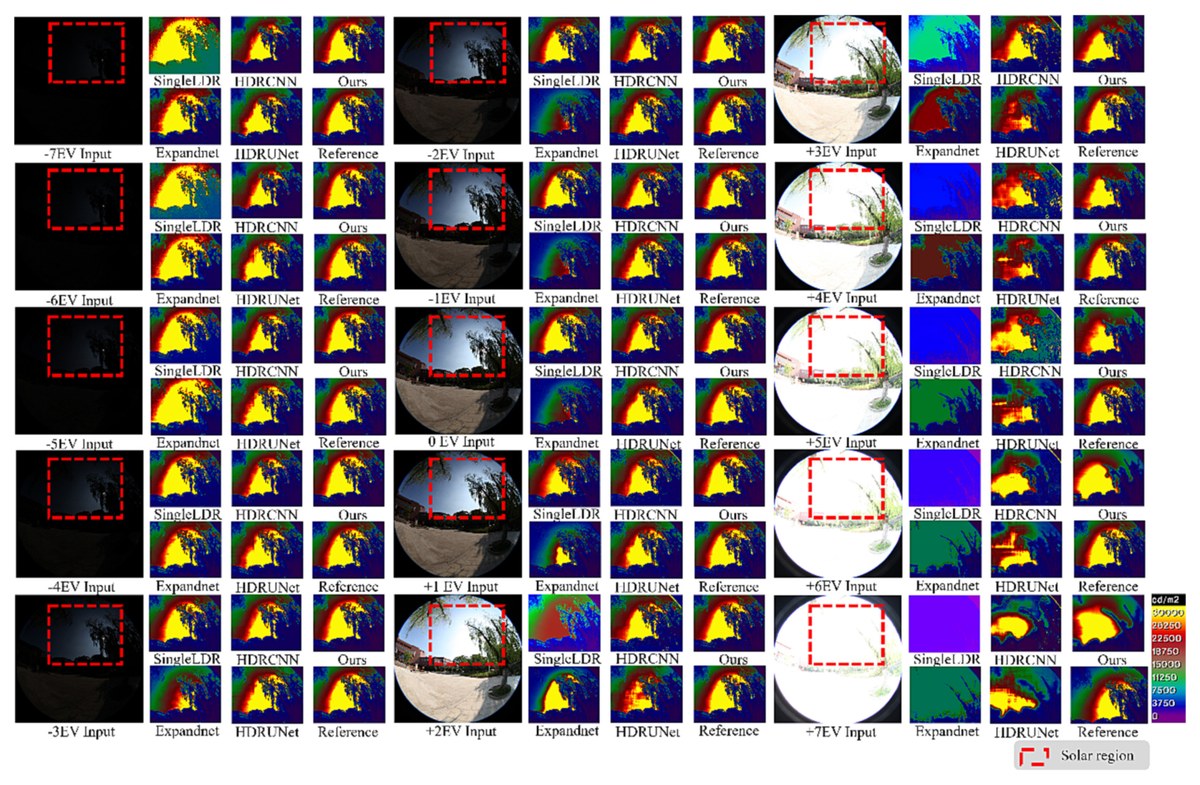
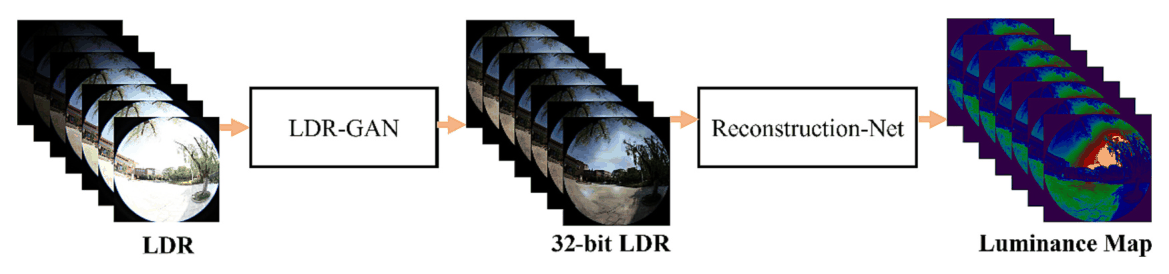
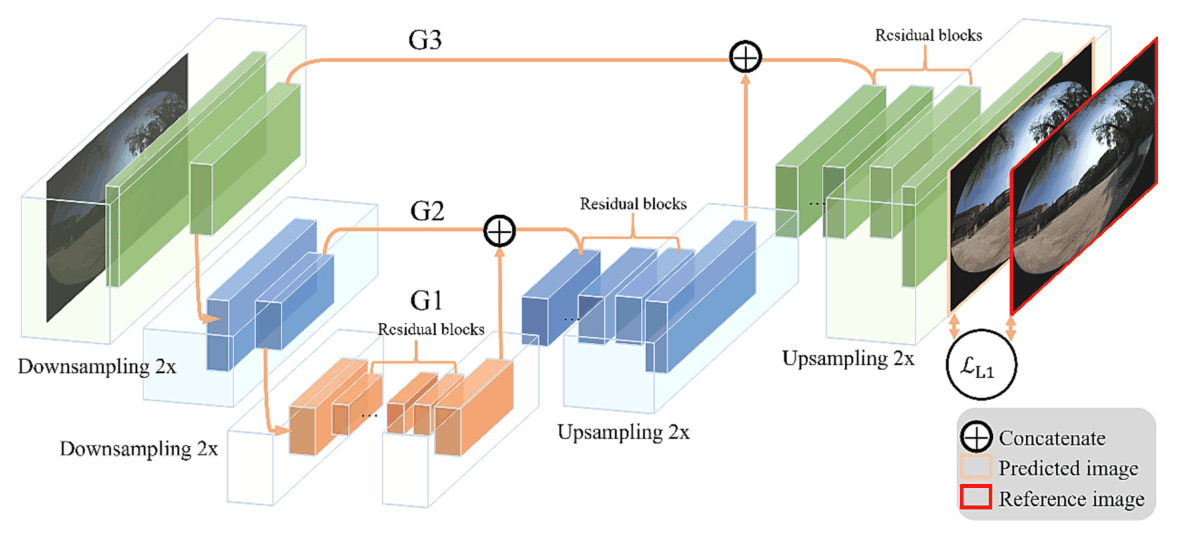
A two-step network, SingleLM-Net, was developed to transform a low-dynamic-range fisheye image into a luminance map suitable for visual-comfort analysis. The first stage restores information in under- and overexposed regions using a generative adversarial network; the second reconstructs luminance values with a U-Net-based model. Training and evaluation used a dataset of 884 scenes, each assembled from 15 exposure levels.
Key findings
The method achieved a peak signal-to-noise ratio of 59.24 and an R² of 0.9054 for daylight glare probability on the test set. It processed each image in approximately 0.1 seconds on an RTX 2060 GPU and reduced processing time by up to 95 times compared with the conventional HDR workflow.
Contribution
Conceptualization, data curation, methodology, software, visualization, and original-draft writing.