
Advanced terminal devices and heat pumps across Chinese climates
Overview
This project examined how advanced HVAC terminal devices and heat-pump configurations perform in a medium-sized office building across China’s five climate zones.
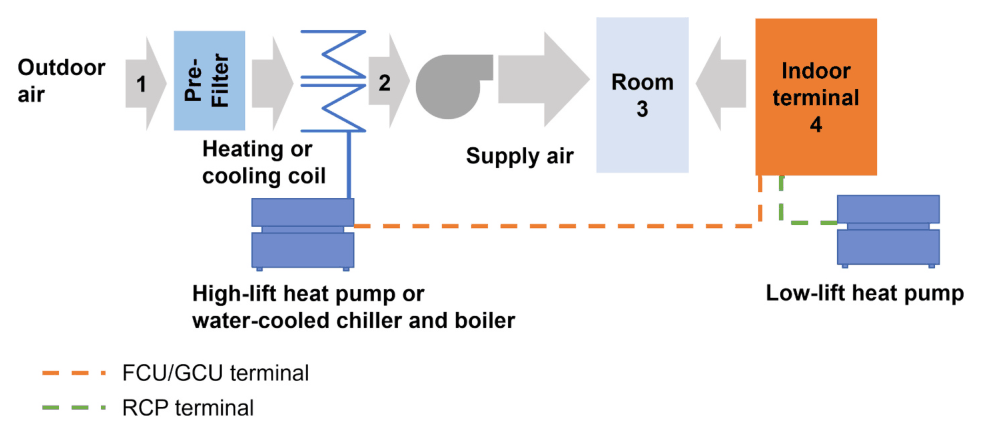
Method
Radiant ceiling panels and gravity cabinet units were compared with conventional fan-coil units under alternative heat-pump configurations. EnergyPlus simulation and life-cycle cost analysis were used to evaluate energy consumption, payback periods, net present value, and sensitivity to internal loads.
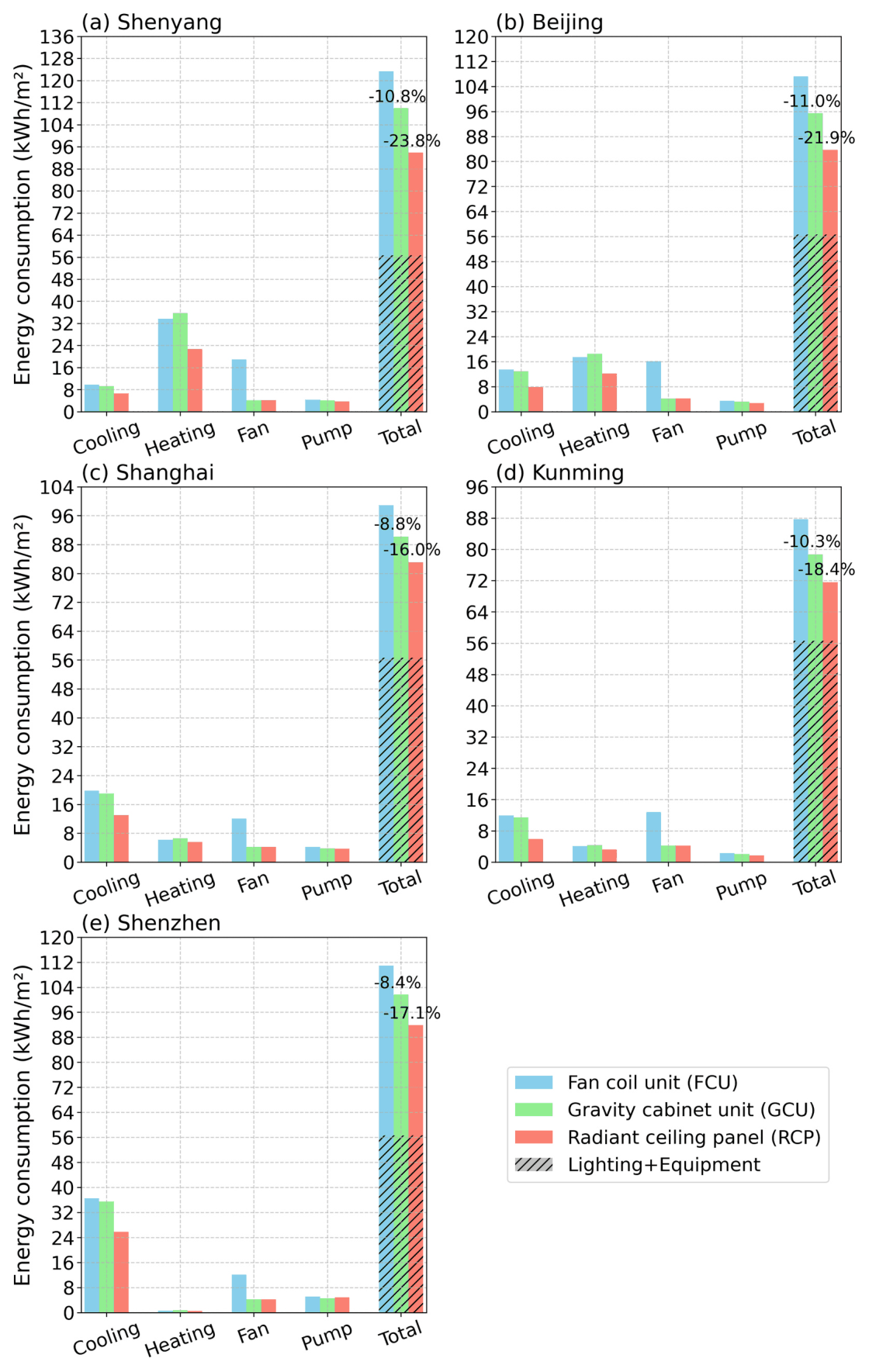
Key findings
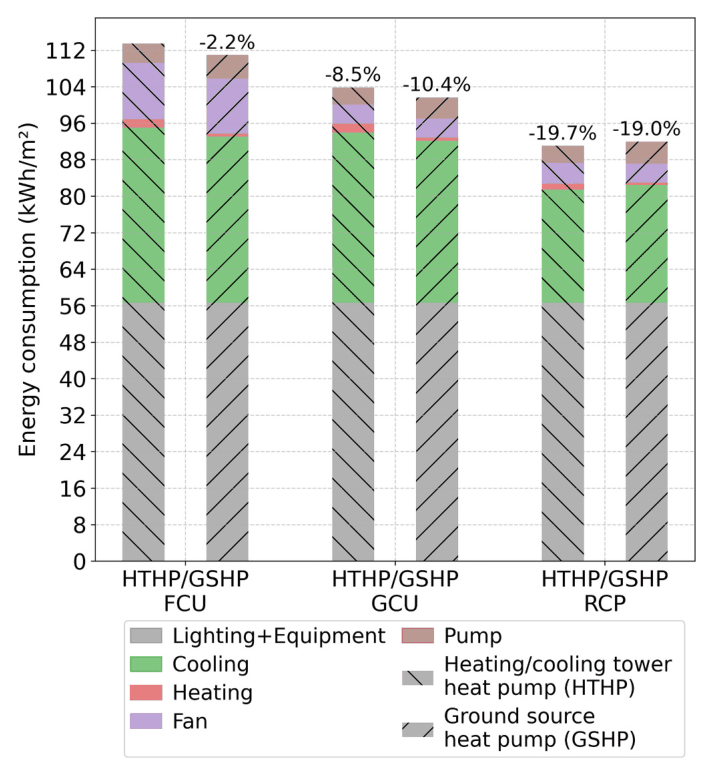
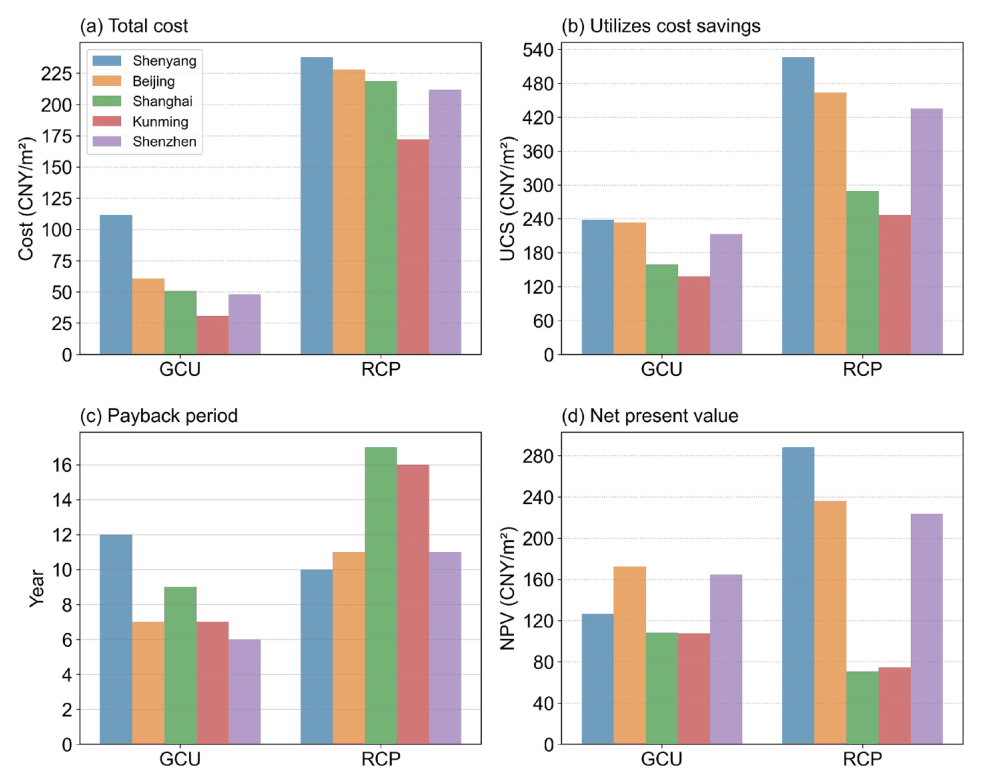
Radiant ceiling panels reduced energy use by 16-24%, while gravity cabinet units achieved reductions of 8-11%, primarily through lower fan energy. Both systems performed more efficiently in colder climates. Radiant systems offered greater savings but higher initial costs and 10-17-year paybacks; gravity cabinet units recovered their costs in under 12 years across the studied climates.
Contribution
Conceptualization, data curation, methodology, software, visualization, and original-draft writing.