
Terminal devices, thermal comfort, and ventilation uniformity
Overview
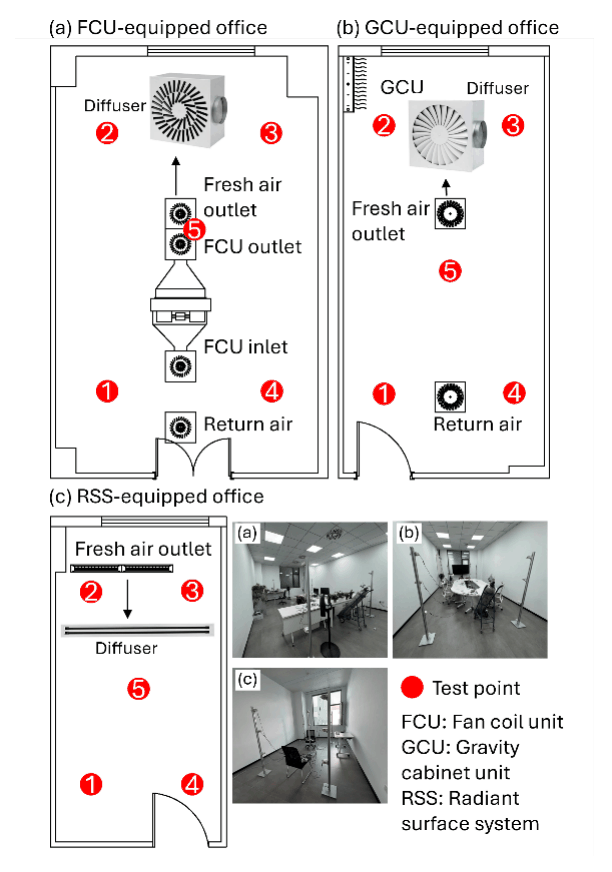
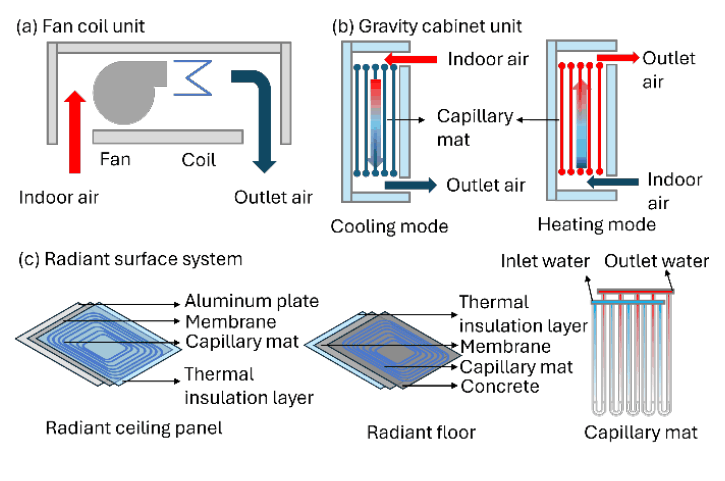
This field study compared how three terminal systems - fan-coil units, gravity cabinet units, and radiant surface systems - affect ventilation distribution and vertical temperature uniformity in an office building in Suzhou.
Method
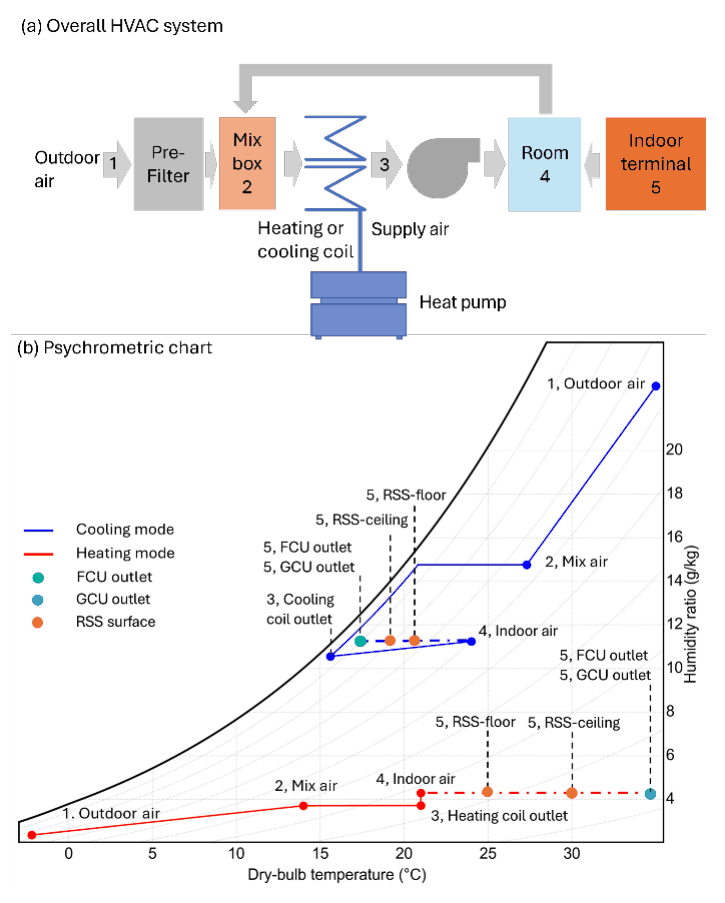
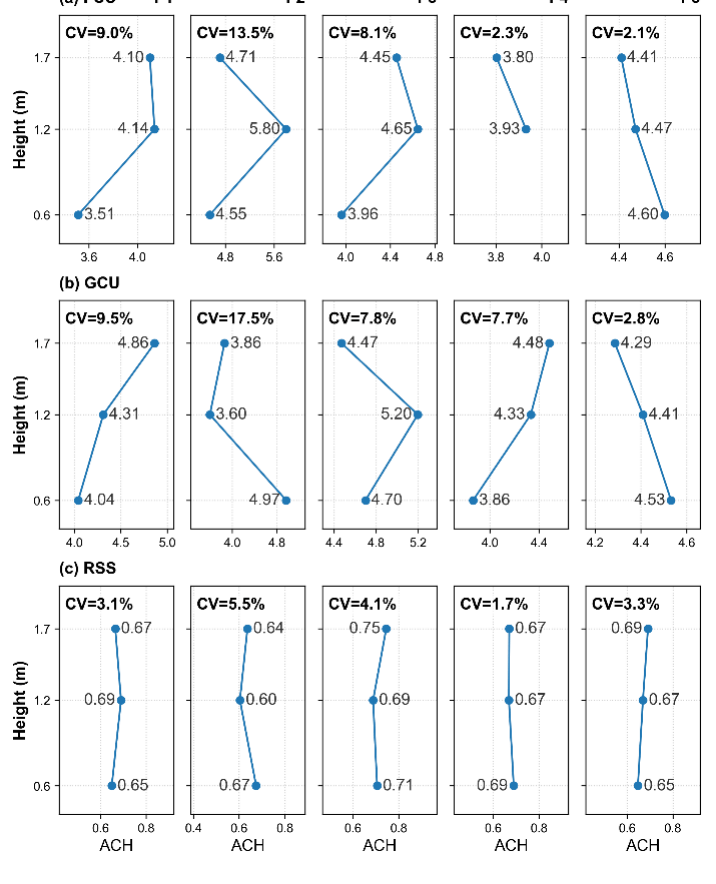
Measurements were conducted under summer cooling and winter heating conditions. Local air-change rates were derived from carbon-dioxide decay, while air temperatures were measured at multiple locations and heights to quantify ventilation uniformity and vertical stratification.
Key findings
All three systems maintained ankle-to-head temperature differences below 2 °C in both seasons. Fan coils provided the most consistent year-round performance; gravity cabinet units produced the best thermal uniformity during cooling but the greatest stratification during heating; and the radiant system delivered the most uniform heating conditions, with weaker ventilation uniformity during cooling.
Contribution
Conceptualization, data curation, methodology, software, visualization, and original-draft writing.